What is AWS Istanbul Local Zone?Benefits and Use Cases
 by Mehmetcan Ece
16 Temmuz 20268 min read
by Mehmetcan Ece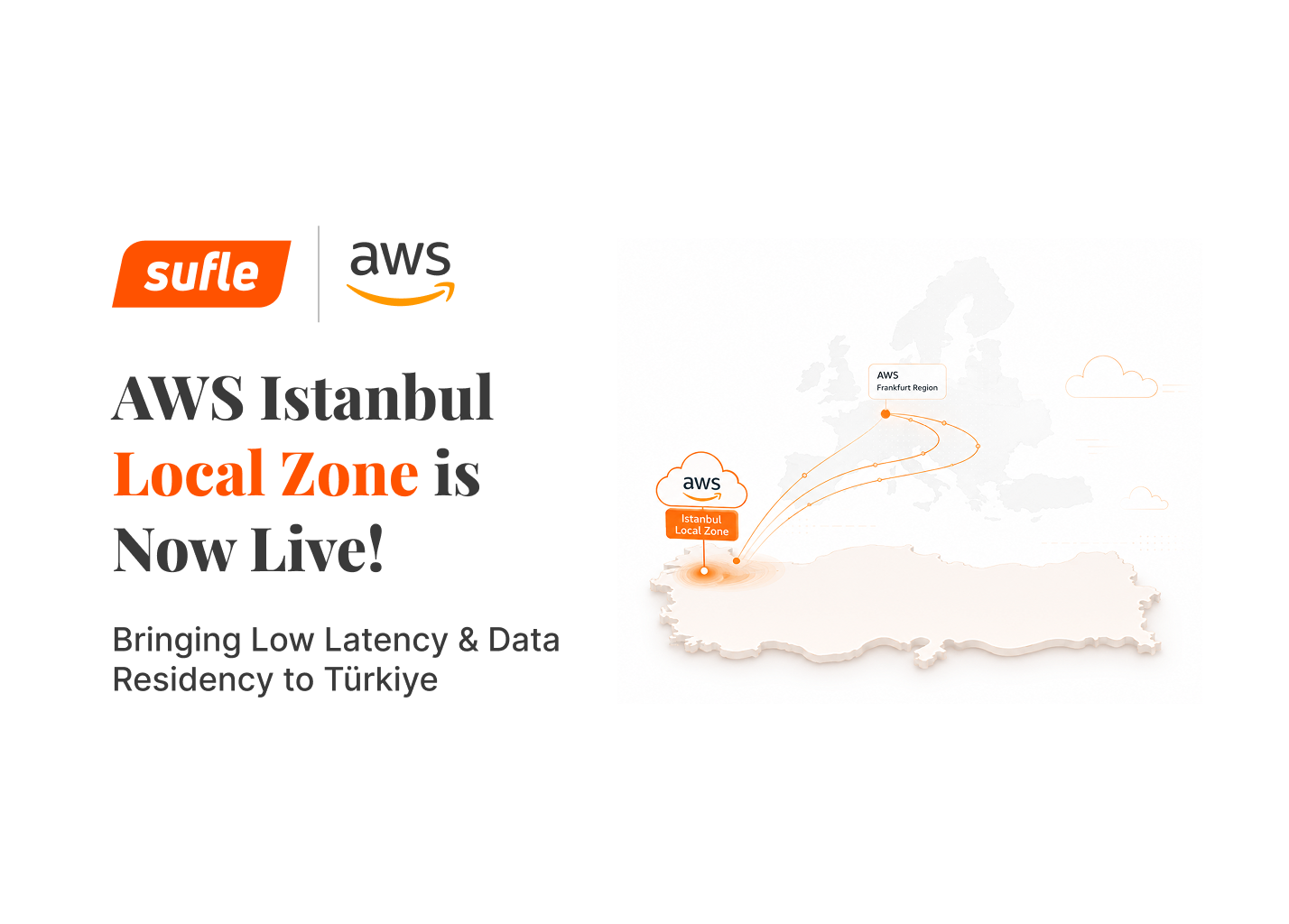


AWS Istanbul Local Zone offers significant advantages such as low latency and the ability to process data within Türkiye. So what exactly is AWS Istanbul Local Zone and in which use cases does it stand out? In this article, we examine the benefits AWS Istanbul Local Zone provides, the services it supports, and the value it delivers for businesses.
As of May 2026, AWS launched a Local Zone in Istanbul. This development marked an important milestone for cloud users in Türkiye and everyone seeking solutions in the region. Until now, companies using AWS in Türkiye typically relied on European Regions such as Frankfurt and Ireland. As a result, application traffic and data were processed through Europe. Data residency, in particular, had long remained a significant agenda item for sectors subject to regulations. Istanbul Local Zone addresses these needs.
A Local Zone is an infrastructure location that AWS deploys in a specific city as an extension of a region. Core services such as compute, storage, and networking are offered in a Local Zone and are managed using the same APIs, tools, and Console as in the region.
Each Local Zone is associated with a parent Region. The parent Region for the Istanbul Local Zone is Frankfurt (eu-central-1). What does this mean? If you have a VPC (Virtual Private Cloud) running in Frankfurt, you can extend that VPC to the Istanbul Local Zone to create a subnet there. Your resources will begin running on this subnet. This allows you to extend your existing infrastructure to include the Istanbul Local Zone without having to set up a separate environment from scratch.
AWS Local Zone is not a new service. The first Local Zone was launched in Los Angeles in 2019. Today, there are Local Zones in more than 30 cities worldwide. It has been serving users with specific requirements and constraints particularly regarding latency and regulations for years. Istanbul joined this network as of May 2026.
Istanbul Local Zone offers two key benefits for Turkey: low latency and data localization. Both of these issues have long remained important priorities for many users. Let’s take a closer look at these benefits.
Network latency from Türkiye to European Regions is estimated to be in the range of 30-50 ms on average. While these figures may seem low at first glance, they can make a significant difference in certain use cases. For example, when a customer taps their card on a payment terminal, the transaction is sent to Europe, approved, and then returned. Similarly, every input a gamer performs is sent to Europe and back to the user. In the finance sector, milliseconds can directly impact transaction speed and user experience.
With Istanbul Local Zone, these latency figures can drop to single-digit milliseconds. This translates to faster authorization processes for payment transactions, a smoother experience in gaming, and lower-latency data flows in finance applications. Today, there are live systems running on Istanbul Local Zone across different sectors such as finance, gaming, and e-commerce. These advantages are not theoretical, they are supported by real-world use cases.
Another important advantage provided by Istanbul Local Zone is data residency. Compute resources running in the Local Zone are physically located in Istanbul. EBS volumes and objects written to S3 are also stored in Istanbul. This provides a clear answer to the question "Where is our data stored and processed?"
Why does this matter? In the finance sector, BDDK and SPK emphasize data localization, while in healthcare, the Personal Health Data Regulation introduces similar requirements. To meet these requirements, organizations have historically either relied entirely on on-premises infrastructure or processed their data in Europe with certain security measures such as anonymization. With Istanbul Local Zone, it becomes possible to leverage AWS infrastructure while keeping data physically within Türkiye's borders for storage and processing.
Which AWS services are available in Istanbul Local Zone? Let's review the key services by category.
Amazon EC2 forms the foundational building block of the Local Zone. The C7i (compute-optimized), M7i (general purpose), and R7i (memory-optimized) instance families are supported. This covers a broad range of use cases from CPU-intensive workloads to general-purpose applications, memory-intensive workloads, and AI/ML inference scenarios.
On the pricing side, On-Demand, Spot Instances, and Savings Plans options are available. This allows choosing models suited to different needs, whether for short-term workloads, cost optimization, or long-term usage scenarios.
On the container side, Amazon ECS and Amazon EKS support is provided. Simply specifying the Local Zone subnet in the task definition or pod spec is sufficient. This makes it possible to continue running on the Local Zone without modifying your existing container pipeline. With EC2 Auto Scaling support, instances in the Local Zone can be automatically scaled during traffic spikes.
Amazon EBS is used as block storage, and disk data attached to instances is physically kept in Istanbul. Backups can be created in the Local Zone with EBS Snapshots. This enables faster recovery times and makes it possible to build a business continuity strategy where data remains within the country.
Amazon S3 (One Zone-Infrequent Access) support is one of the standout features. Offering S3 in a Local Zone is available for the first time in the EMEA (Europe, Middle East and Africa) region with Istanbul Local Zone. Objects, backups, and media files can be stored directly in Istanbul. The One Zone-IA storage class offers single-Zone durability and provides a suitable option for data that is infrequently accessed but needs to be kept locally.
Amazon VPC operates as an extension of your existing VPC. The Local Zone subnet is configured as part of your VPC in the Frankfurt Region. Security groups, NACLs, and route tables can be used in the same way. With Elastic Load Balancing, traffic can be distributed across instances in the Local Zone; both Application Load Balancer and Network Load Balancer are supported.
On the operational side, AWS's core management and security services are also supported:
AWS CloudFormation for infrastructure as code management
AWS Systems Manager for instance management, patching, and configuration operations
Amazon CloudWatch for monitoring and alerting
AWS CloudTrail for audit logging
AWS Shield for DDoS protection
AWS Application Migration Service for migrating existing workloads to the Local Zone
After seeing the advantages Local Zone offers, one of the important questions that comes to mind is: In which scenarios is the Region sufficient, when should Local Zone be preferred, and when should Outposts be considered? Let's briefly review.
Region is the most comprehensive option. All AWS services, multi-Availability Zone support, and high availability are offered here. Although latency is higher due to geographic distance, it remains a strong choice for standard backend applications, batch workloads, and data pipelines.
Local Zone is an extension of the Region into a specific city. It stands out in scenarios requiring low latency and data residency. Since the infrastructure is entirely managed by AWS, there is no need to deal with hardware management. It is a suitable solution for workloads that are latency-sensitive or have regulatory requirements.
Outposts enables AWS hardware to be installed directly in your own data center or facility. It is preferred in scenarios where data must never leave the organization's location. However, since the hardware is located on-premises, operational responsibility increases accordingly.
In practice, the most efficient approach in many scenarios is to evaluate these three options together. By placing latency-sensitive and data-residency-sensitive layers in the Local Zone and other services in the Region, a balanced architecture can be established across performance, cost, and operational efficiency.
Getting started with AWS Istanbul Local Zone is quite straightforward:
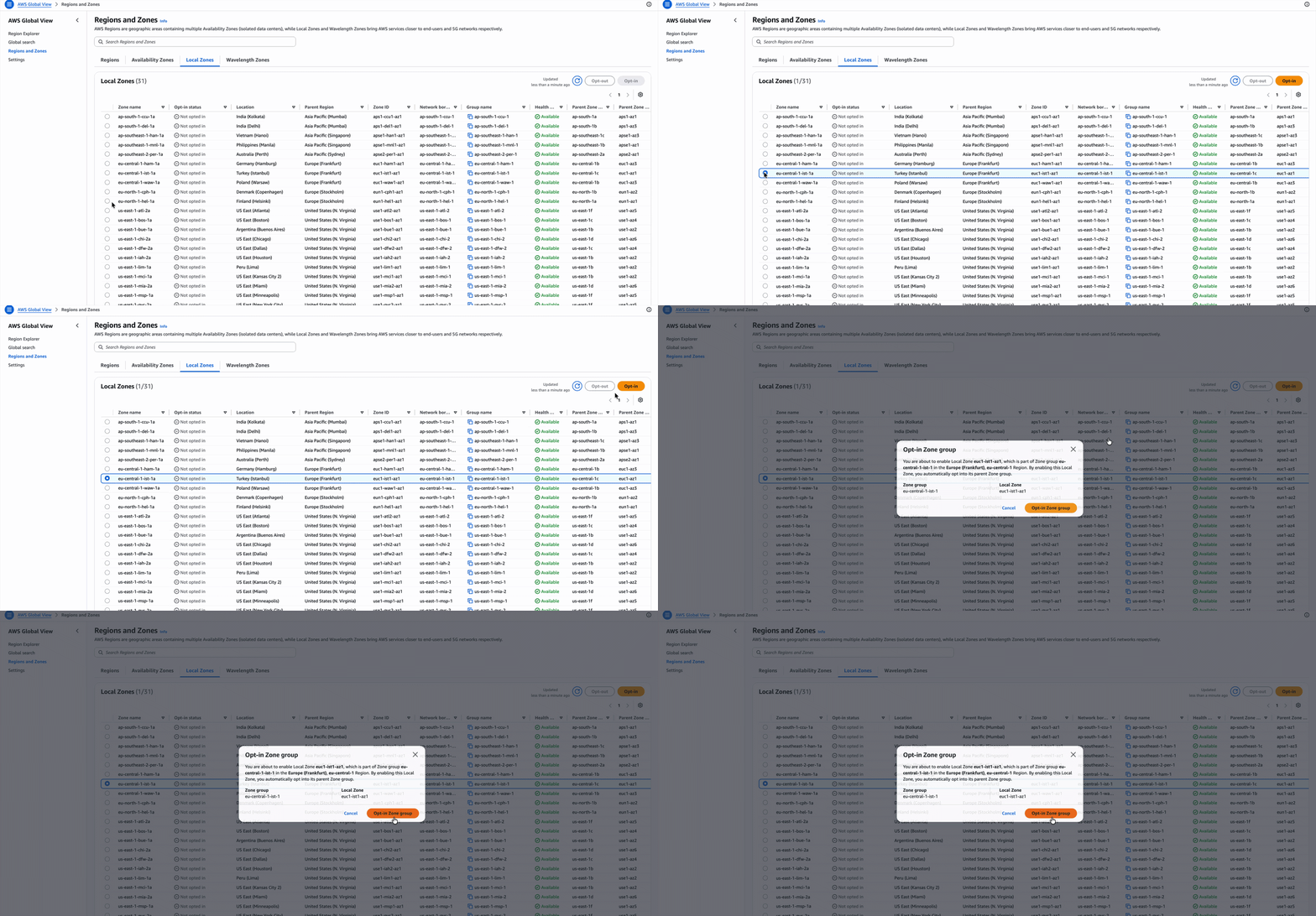
Opt in to Istanbul Local Zone via Global View in the AWS Console (it is disabled by default).
Create a Local Zone subnet in your VPC in the Frankfurt Region.
Launch an Amazon EC2 instance or create an Amazon S3 bucket on that subnet.
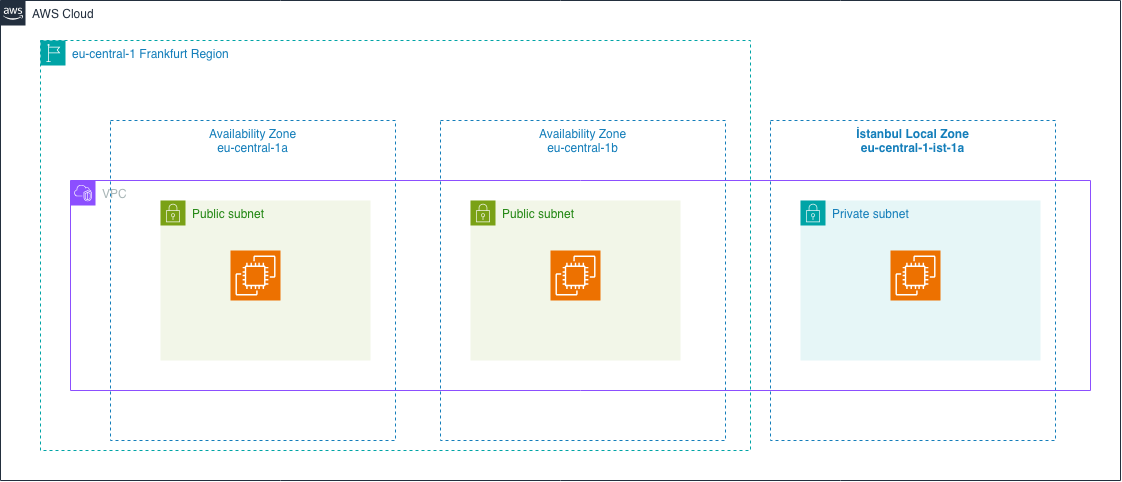 Integration with existing infrastructure is also quite easy. An AWS Direct Connect location has been available in Istanbul since 2025 and can be used together with the Local Zone. Additionally, low-latency content delivery architectures can be built by combining a CloudFront edge location with a Local Zone origin. For organizations in Türkiye using AWS Outposts, hybrid scenarios that work together with the Local Zone are also supported.
AWS Istanbul Local Zone offers significant opportunities for workloads requiring low latency and data residency. However, identifying the right use cases and planning the existing architecture accordingly is critically important.
As Sufle, with our AWS Advanced Consulting Partner status, we design, modernize, and optimize companies' cloud infrastructures in the areas of cloud, DevOps/DevSecOps, and compliance. We provide end-to-end support for Istanbul Local Zone migration planning, hybrid architecture design, and optimization of existing infrastructure.
If you are evaluating AWS Istanbul Local Zone or planning to adapt your existing architecture to this new infrastructure, feel free to contact us.
AWS – Now Open: AWS Local Zones in Istanbul, Türkiyehttps://aws.amazon.com/blogs/infrastructure-sustainability/now-open-aws-local-zones-in-istanbul-turkiye/
AWS Local Zones Features https://aws.amazon.com/about-aws/global-infrastructure/localzones/features/
AWS Local Zones Locationshttps://aws.amazon.com/about-aws/global-infrastructure/localzones/locations/

Ready to take advantage of AWS Istanbul Local Zone? Contact Sufle to evaluate your infrastructure and design the right architecture for low-latency, secure, and compliant workloads.

Mehmetcan is an AWS Certified Cloud and Platform Engineer with a deep passion for cloud-native technologies and Kubernetes ecosystems. He focuses on building secure, efficient, and scalable platforms, believing that taking true ownership and making well-thought-out architectural choices are what truly make a platform reliable.
Check out our latest updates and articles on our usage of technology, solutions and guidances.
We use cookies to offer you a better experience.