From Mentorship to Engineering:A Career Journey at Sufle
 by Kasım Mirza Sak
14 Mayıs 20266 min read
by Kasım Mirza Sak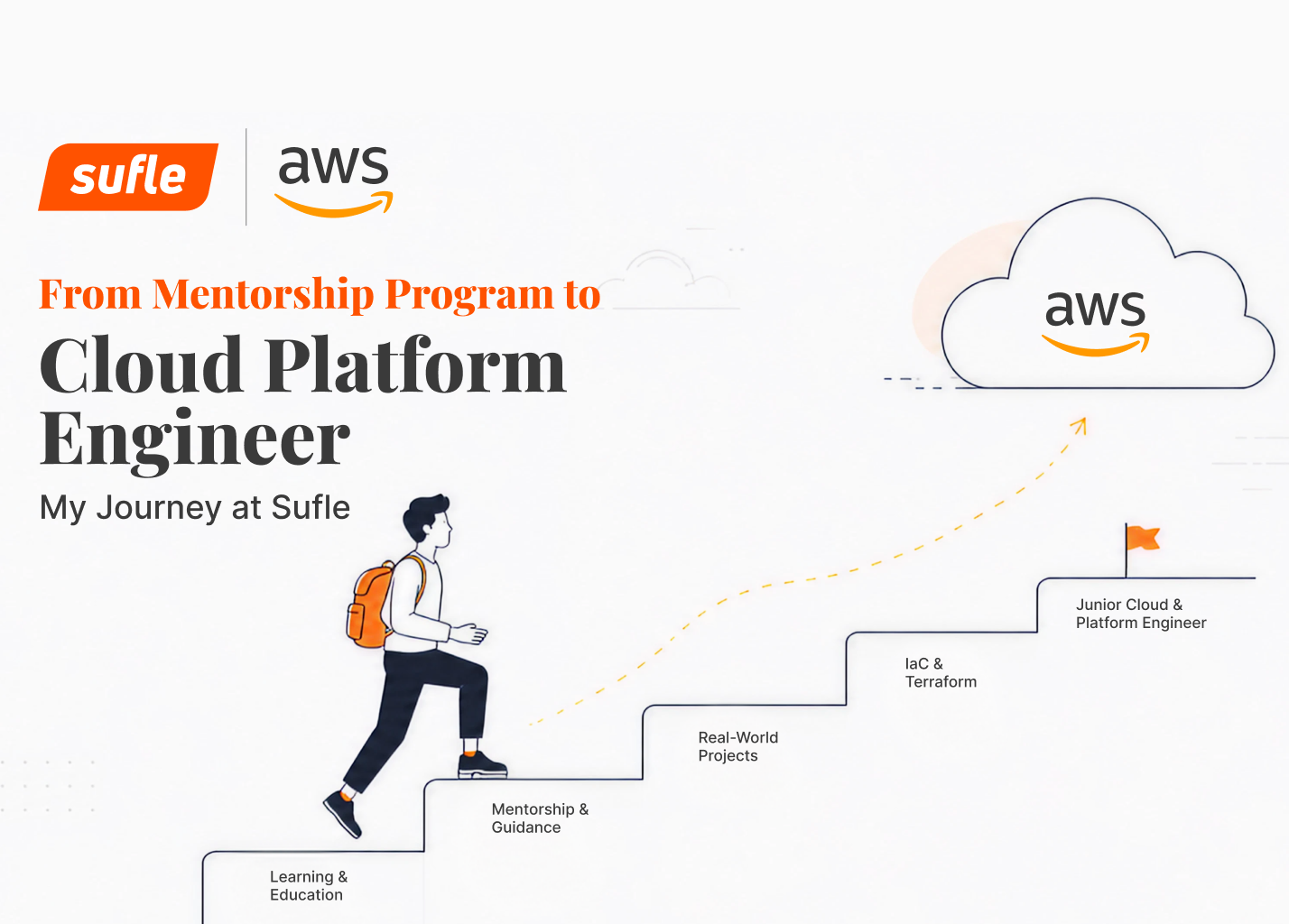


Like many people trying to improve themselves in the field of technology, my learning process revolved around tutorials, documentation, and certifications for a long time. As I leaned towards the Cloud side, I started consuming more resources and was learning a great deal theoretically.
However, I eventually realized something: theoretical knowledge was important, but seeing how real systems are built and managed was something else entirely. This is exactly where I crossed paths with Sufle’s mentorship program.
At a time when I was trying to develop myself in the Cloud field, I was researching different communities and programs. Since Sufle is one of the leading companies in the industry, it was already among the companies I followed closely. While browsing on LinkedIn, I came across Sufle’s mentorship program.
The goal of the program was very clear: to bring together people who want to enter the sector or improve themselves with engineers working in this field. Honestly, this was the most attractive part for me. Because when learning alone, it is often not possible to see how systems are built in real life or how teams operate.
At that time, I was taking many courses, reading documents, and of course, preparing for AWS certifications. I was beginning to master many topics theoretically.
But I constantly had this question in mind: "Okay, but how are these things actually done in real life?" In other words, how is an infrastructure actually built, how is it managed, and how is it made sustainable?
This was exactly why I applied for the mentorship program. I wanted to see real systems and the industry's way of working more closely.
One of the most valuable aspects of the mentorship process for me was the opportunity to talk regularly with someone experienced. I had weekly meetings with my mentor, and these meetings were often very educational for me.
Sometimes we talked about a technical topic, and sometimes we chatted about which subjects are truly important in the industry. Especially during the period when I was preparing for AWS certification exams, the advice and small tips given by my mentor were extremely helpful. Getting guidance on how to approach the exams and which topics to focus on more made the process much more efficient.
Apart from that, one of my most valuable gains was a better understanding of how cloud services are used in real life. In tutorials and documentation, you learn what the services do, but seeing how these services are brought together in real systems is a completely different experience.
During this process, I had the chance to better understand how critical the Infrastructure as Code (IaC) approach is in the industry. I realized that managing infrastructure with code makes systems both more sustainable and more manageable.
At this point, seeing how tools like Terraform play such a central role in modern cloud infrastructures was very enlightening. Seeing how some concepts I previously knew in theory were used in practice significantly accelerated my learning process.
Looking back, the mentorship process was not just about learning new technologies and getting certifications for me. It was also a process where I better understood how to think in the industry, how to approach systems, and which topics are truly important.
Towards the end of the mentorship program, the process reached a very exciting point for me. Around that time, a job opening appeared at Sufle. I had the chance to discuss this during one of my meetings with my mentor.
With my mentor’s guidance, I decided to apply for the position. I can honestly say that the things I learned during the mentorship process gave me the confidence to do so.
Following the application process, I started working at Sufle as a Junior Cloud & Platform Engineer. Thus, the mentorship program did not just remain a learning experience for me; it became the starting point of my career.
The fact that many topics I once wondered about—thinking "how are these things done in real life?" are now part of my daily job makes this journey even more meaningful for me.
If you are considering participating in a mentorship program, I can share a few suggestions based on my own experience:
Be Curious: One of the most valuable parts of the mentorship process is the opportunity to ask questions. How well you utilize this opportunity is entirely up to you. Don't hesitate to ask about things on your mind and try to use these meetings as efficiently as possible.
Don't Just Stay in Theory: Try to apply what you learn as much as possible. Your meetings with your mentor should not be limited to just conversations and notes. Going over the topics after the meetings and trying to truly understand them by practicing makes the process much more productive.
Get Your Hands on the Tools: Instead of just reading about tools like Terraform or watching videos, try to use them yourself. The best way to truly learn a tool is to work with it. Instead of reaching the point of saying "I know it" without actually using it, learning by experimenting and encountering errors is much more instructive.
Be Patient: Growth in the field of technology is often a process that requires time and effort. However, a right learning environment and good guidance can significantly speed up this process.
The Sufle mentorship program was not just a process where I learned new things. It was also an experience where I better understood how the industry works and was able to draw a clearer direction for my career.
I can easily say that this program played a significant role in me working as a Cloud Platform Engineer today.
If you are interested in the cloud field and want to develop yourself, Sufle’s mentorship program offers a truly valuable opportunity. It was a very educational and transformative experience for me. I definitely recommend anyone who wants to embark on a similar journey to check out the program.

The new term excitement is here! Visit our Mentorship Program page for details and to apply.

Kasım is an AWS & Datadog Certified Cloud and Platform Engineer with a deep passion for open-source and Linux ecosystems. He specializes in building systems where security is an infrastructural necessity, driven by the core belief that lifelong learning is the only true prerequisite in the technology industry.
Check out our latest updates and articles on our usage of technology, solutions and guidances.
We use cookies to offer you a better experience.